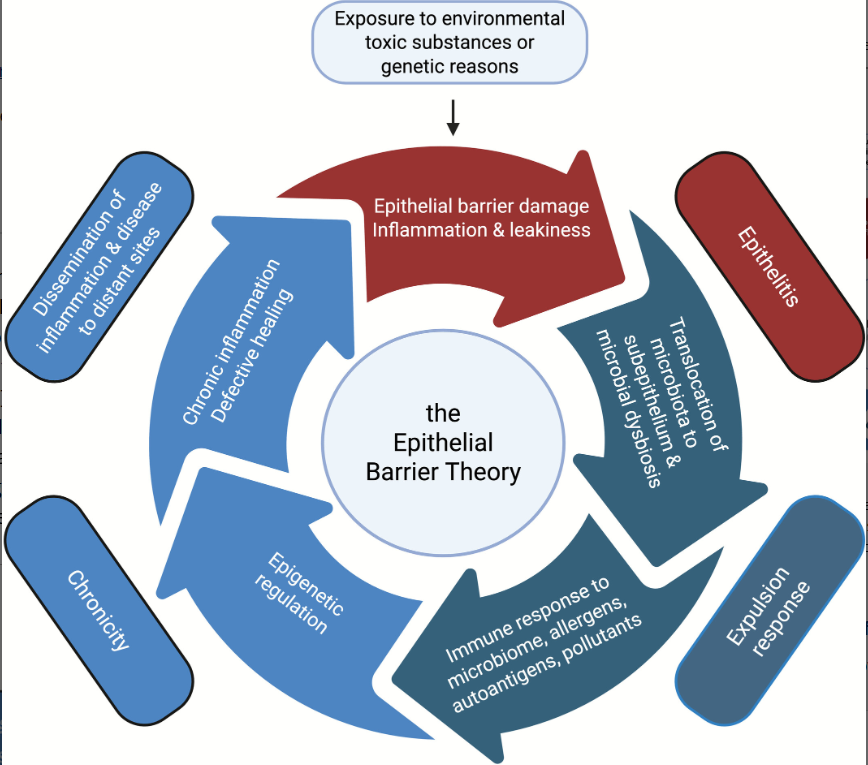
Thetraditional view of the epithelium as only a physical shield has evolved intothe Epithelial Barrier Theory, which places epithelial dysfunction as theprimary driver of both local and systemic chronic inflammation. Whenenvironmental stressors, ranging from pollutants and microplastics to common householddetergents, damage these mucosal barriers, they trigger"epithelitis," a state characterized by the release of alarmins likeThymic Stromal Lymphopoietin (TSLP) and the translocation of microbial productsinto the bloodstream. Clinicalevidence from Suzukawa et al. reinforces this paradigm shift, demonstratingthat elevated serum TSLP levels in asthma patients correlate not onlywith severe airway disease but also with a significantly higher burden ofsystemic comorbidities, such as hypertension, metabolic syndrome, and COPD.Ultimately, this editorial suggests that the epithelium acts as a criticalimmune rheostat; recognizing markers of its distress may be the key toidentifying and mitigating a "vicious cycle" of inflammation thatbridges mucosal damage with widespread systemic disease.
Read the editorial here